First company · 3D-printed hardware · acquired

VR flight-sim cockpits, at 10× below the industry.

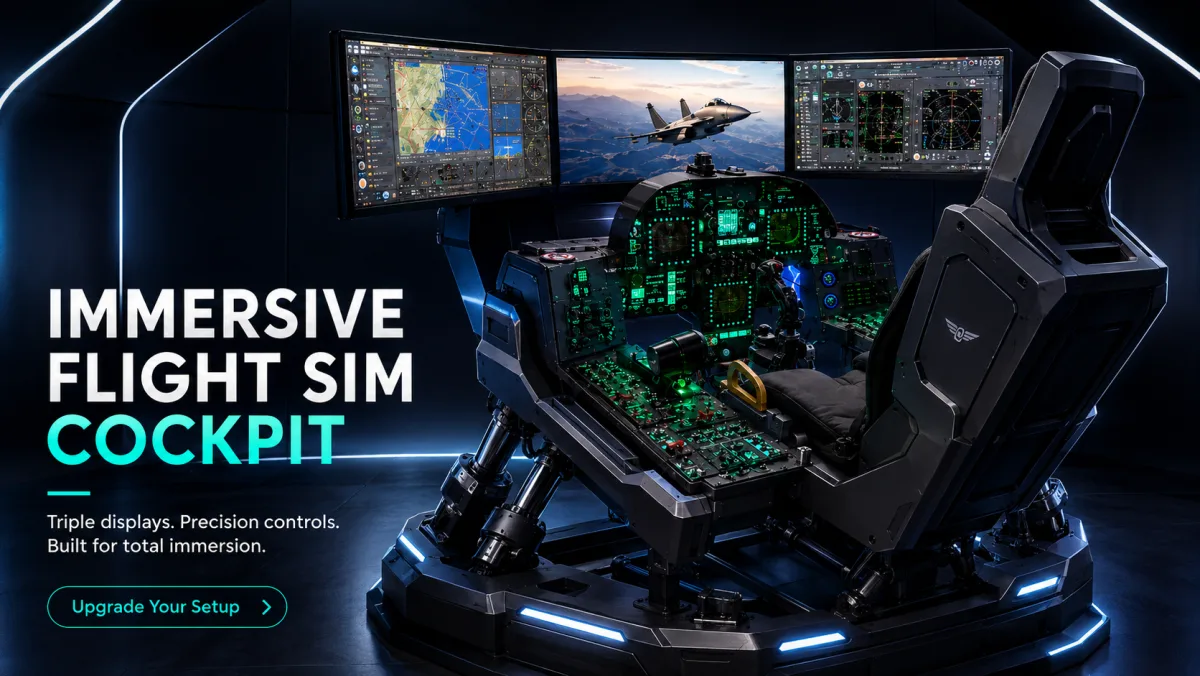
Triple displays. Precision controls. A VR flight-simulator cockpit experience — engineered to be obtainable, not just aspirational. Air Quake Simulations was the company I founded first: affordable, 3D-printed cockpit components that undercut incumbent hardware by an order of magnitude. Built it, shipped it, and it was acquired before I turned 21.

Air Quake immersive flight-sim cockpit — triple curved displays, full instrument panel, and a tactical seat in a hangar-lit bay
The Air Quake cockpit — triple displays, full instrument deck, precision HOTAS, built for total immersion.
10×
below incumbent flight-sim cockpit pricing
3
wraparound displays for true peripheral immersion
<21
the age I was when the company exited
The build

A real cockpit, not a desk with a joystick.

Incumbent immersive cockpits cost as much as a car and shipped to a handful of enthusiasts and training outfits. Air Quake set out to collapse that — a precision-built, triple-display cockpit with genuine instrument fidelity, at a price an actual person could justify.

It meant owning the whole stack: 3D-printing the frame and components, the display geometry, the control hardware, and the software glue that made commercial flight sims feel native on it. The result was a cockpit that felt like the expensive thing — at a tenth of the cost. The company was later acquired.

Triple-display geometry

Three angled panels tuned for true peripheral coverage, so glances to your wing read like instinct, not menu-diving.

Precision controls

HOTAS-grade stick and throttle with the resolution and centering you feel in the first thirty seconds — and trust by the first landing.

Built for total immersion

Instrument deck, seat, and sightlines designed as one rig — the difference between playing a sim and flying one.
The story

Where I learned to ship hardware.

Air Quake was my first company. It taught me the things that don't transfer from software: tolerances, suppliers, freight, the cost of being wrong about a part. We undercut the incumbents by an order of magnitude and still delivered something people wanted in their homes — then I sold the company before I turned 21.

Today I build Wrodium and measure AI, but the instinct is the same: take something gatekept and expensive, and make it obtainable.

Curious what I'm building now?

From flight-sim hardware to AI citation infrastructure — same playbook, new domain.

Back to arlenkumar.com →